
These places were designed to heal people. (Hint: they didn’t. Let’s unpack that.)
Grab a coffee. We’re about to emotionally process an abandoned asylum.
I want you to picture something with me…
A massive brick building. Overgrown grounds. Peeling paint. Long hallways that seem to stretch further than they should. Maybe you’ve driven past one. Maybe you’ve seen photos online and felt something you couldn’t name.
Today, we’re going to look at one of the most mystical type of abandoned buildings see across the country and featured on some of the most adventure TV shows, Asylums and Sanatoriums. We will also explore These types of buildings, their impact on mental health and society, and how they continue to hold important information that we as a society should never forget.
How the Asylums Came to Be
Before asylums existed, the mentally ill were kept in jails, basements, and attics. They were chained in private homes and forgotten. That changed when a woman named Dorothea Dix took up the cause.
Dix testified before state legislatures, documented conditions, and demanded better treatment for those society wanted to hide and forget. She became the catalyst for an entire movement that said: “These people deserve a place built for them.”
The first asylum in the U.S. opened in Virginia in 1770. The first Kirkbride Plan hospital, Trenton State Hospital, opened in 1848.
Dix didn’t design the buildings. But she made sure they got built. It’s from there we learned powerful lessons about how to treat people.
Buildings Have Opinions
Here’s the thing nobody tells you: architecture is never neutral. For most buildings, there is a reason for certain aspects of the structures. Think of the White House, libraries, and hospitals, where everything has a reason for existing.
Every wall, hallway, doorway, and window placement holds a belief. Sanatoriums, asylums, orphanages, and reform schools weren’t just buildings. They taught obedience before anyone said a word. They taught danger through locked doors and narrow corridors. The floor plan was the philosophy, and once you start seeing it, you can’t unsee it.
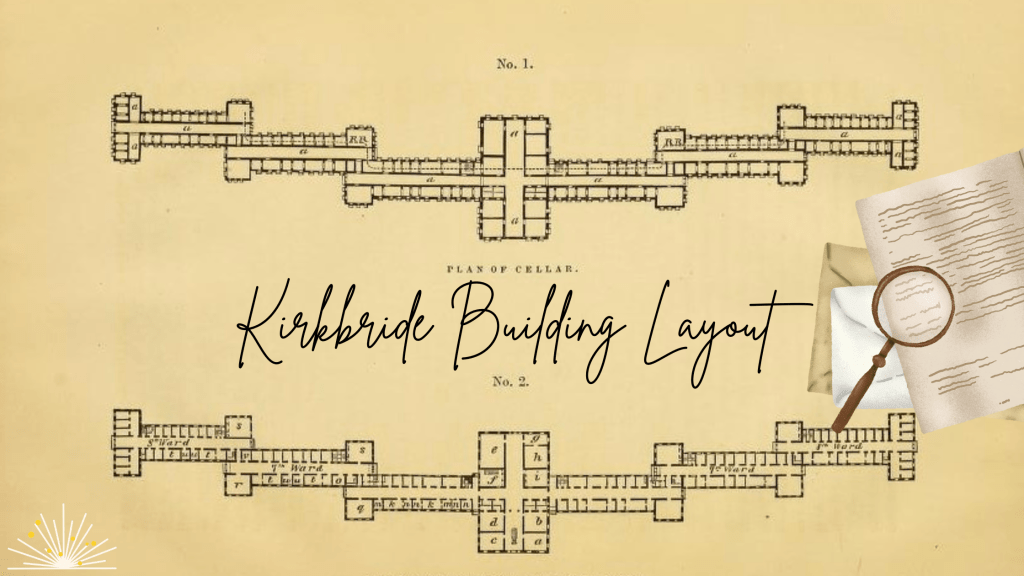
Enter Dr. Thomas Kirkbride (and His 78 Page Asylum Architecture Plans)
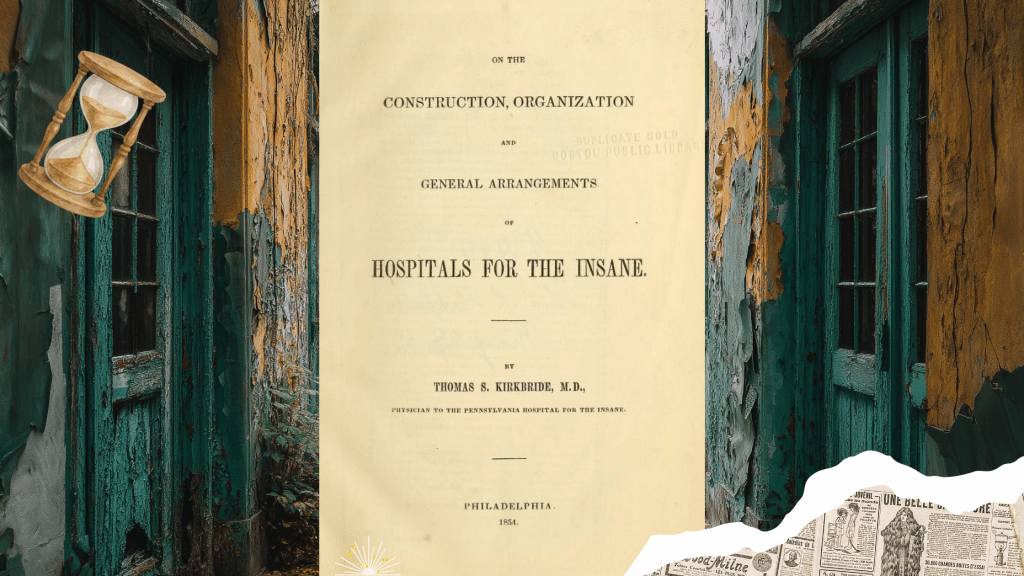
In 1854, a physician named Thomas Kirkbride published a book that would shape American asylum architecture for decades. He believed something radical for his time: that the mentally ill deserved kindness and things like sunlight, fresh air, and dignity. At this time, it was a pretty wild concept.
Dr. Kirkbride decided to solve this issue by designing the healing into the building itself, calling it “a special apparatus for lunacy.”
The Kirkbride Plan was meticulous. Obsessive, even. It specified:
- Minimum 100 acres of land
- Eight wings stretching outward like a bat in flight
- 12-foot ceilings for airflow
- One patient per room (250 patients maximum)
- Staff of 71 people, all living on site
- 10,000 gallons of water per day
- Enclosed pleasure gardens
- Specific drainage requirements
- Well-seasoned wood, counter sealed, floors inclined toward doorways
- …and many more extremely detailed building standards
(Check out the whole book on Archive.org in all of its obsessive glory.)
He thought of everything. His book included page after page of requirements for a building that was supposed to make people better just by existing inside of it.
This idea was also known as Moral Treatment, rooted in Quaker beliefs that compassion, structure, and environment could rehabilitate the mind. It extended the theory of how effective these buildings really should have been. It was hopeful. It was humane. It was also, in many ways, a huge misapplication.
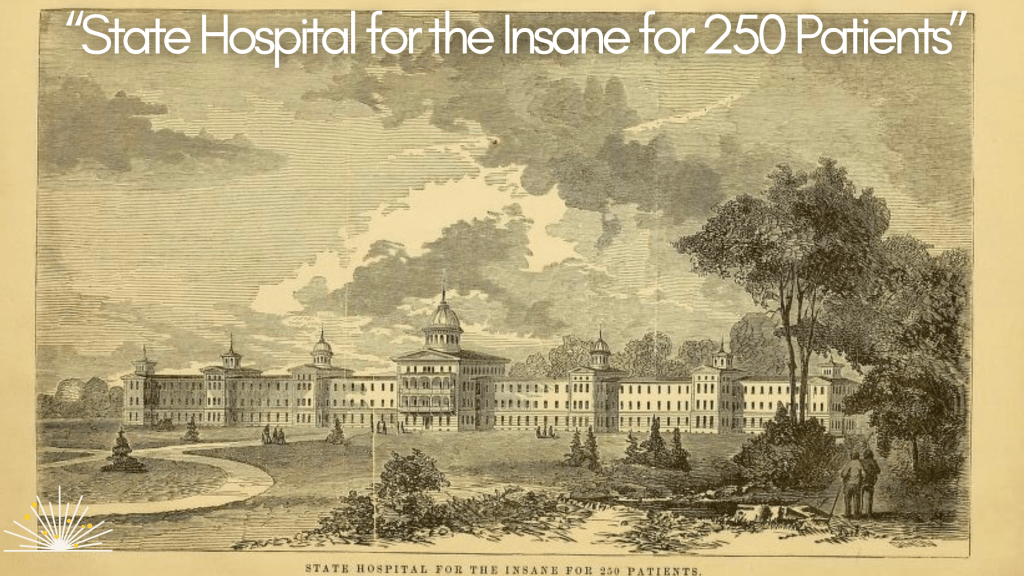
The Gap Between the Blueprint and the Reality
Here’s where it gets complicated. Kirkbride asylums were designed for 250 patients. By the early 1900s, many held over 2,000.
The sunlight-filled wards became massively overcrowded. The requisite pleasure gardens were forgotten. The one-patient-per-room ideal turned into rows of beds lining the hallways. Staff ratios collapsed. Patients were no longer receiving the moral treatment they were promised. They were being managed, controlled, and warehoused.
The architecture stayed the same. The belief behind it died. And that’s the thing about buildings: they outlive their intentions.
What the Walls Were Really Teaching
Every institutional layout answers a set of questions, whether it means to or not. These questions can also be used to evaluate any building that serves a purpose to humans:
- Who holds authority here? (Where does the superintendent sit?)
- Who is being watched? (Can patients see each other? Can staff see everyone?)
- How is movement controlled? (Are there open corridors or locked wards?)
- Who is separated from whom? (Men from women. “Violent” from “docile.” Wealthy from poor.)
- What behavior is being enforced? (Silence? Stillness? Compliance?)
These weren’t accidents. They were architectural choices that reflected social beliefs about who was dangerous, who was disposable, and who got to decide what “normal” looked like.
A Quick Tour of Institutional Layouts
Kirkbride wasn’t the only philosophy made physical. Other models emerged:
| Layout | Philosophy |
| Kirkbride Plan | Environment heals. Symmetry, air, light, dignity. |
| Panopticon / Radial | Surveillance heals. One guard sees all. Control through visibility. |
| Pavilion / Detached | Separation heals. Isolate by condition. Prevent contagion (literal and moral). |
| Cottage / Colony | Labor heals. Small homes, farm work, “wholesome” productivity. |
| Campus / Radial | Community heals. Spread across grounds like a small town. |
Each one said something about what society believed caused madness and what might cure it.
Environmental Determinism: The Fancy Term for All of This
There’s a social science theory that captures what Kirkbride, Dix, and their contemporaries believed. Environmental determinism: the idea that physical surroundings shape human development, behavior, and potential.
Put someone in a dark, cramped, chaotic space? They’ll deteriorate. Put them in a light-filled, orderly, peaceful space? They’ll heal.
It sounds reasonable. But here’s the shadow side: environmental determinism also decided who deserved those healing environments and who didn’t. It sorted people into categories. It created diagnostic labels that did more harm than good. It built beautiful buildings and then filled them with people society wanted to forget.
The architecture said, “We care.” The overcrowding said, “Not that much.”
Why This Still Matters
When I walk through an abandoned asylum, I’m not just looking for ghost stories.
I’m asking:
- Who was labeled “problematic” here?
- What was considered treatment?
- Who decided what was normal?
- What systems existed to help, and which ones existed to control?
- How do we still see these patterns today?
We still ask these questions when we design spaces that sort, watch, and manage people.
The ghosts aren’t always supernatural. Sometimes the ghost is an idea that never died. It just moved into a different building.
What This Site Teaches Us
Every abandoned institution is a lesson:
- About power hidden in floor plans
- About good intentions that curdled into harm
- About diagnostic labels that followed people for life
- About who society protected and who it discarded
We don’t study these places to be spooked. We study them to understand the blueprints we’re still living inside.
Citations:
 A Coffee Break With the Past
Leave a comment