Types of Readings Continued
As we learned in Parts 1 & 2, there are many ways to read tarot cards, and no single method is considered “correct.” Whether you are a beginner learning how to read tarot cards or an experienced reader refining your practice, the method you choose should match your intention and comfort level. In this blog, we’re going to take a deeper dive into the types of readings and the different outcomes.
Open Tarot Readings (No Question Readings)
An open tarot reading does not begin with a specific question. Instead, the reader allows the tarot cards to highlight themes, patterns, or messages that may be important at the moment.
Open readings are commonly used for:
General life guidance
Emotional check-ins
Intuitive development
This style of tarot reading encourages reflection and self-awareness rather than prediction.
One-Card Tarot Readings
A one-card tarot reading is a quick and focused way to receive guidance. Many people use one-card pulls as a daily tarot practice, drawing a single card each morning and reflecting on its meaning throughout the day.
This method is especially helpful for beginners and those who want to build consistency with tarot.
Using Tarot Cards for Journaling
Tarot cards are often used as journaling prompts for self-reflection. A common practice is to draw one tarot card and write about:
Emotions the card brings up
Symbols that stand out
How the card relates to current experiences
Over time, tarot journaling can reveal patterns, personal growth, and recurring themes in your life.
Tarot Cards as a Meditation Tool
Tarot can also be used for meditation and mindfulness. By focusing on the imagery and symbolism of a single card, you can gain deeper insight into your thoughts, intuition, and subconscious mind.
This approach is often used to strengthen intuition and deepen your personal connection to the tarot.
How to Interpret Tarot Cards
Tarot cards are not meant to predict the future in a fixed or absolute way. Instead, tarot provides insight into the present moment, helping you better understand your thoughts, feelings, and choices.
Each tarot card has:
A traditional meaning
A reversed meaning (when drawn upside down)
Contextual meaning based on the spread and question
Some readers interpret reversed tarot cards as blocked or internalized energy, while others choose not to use reversals at all. Both approaches are valid.
The most important element of tarot interpretation is intuition.
Tarot Card Meanings Overview
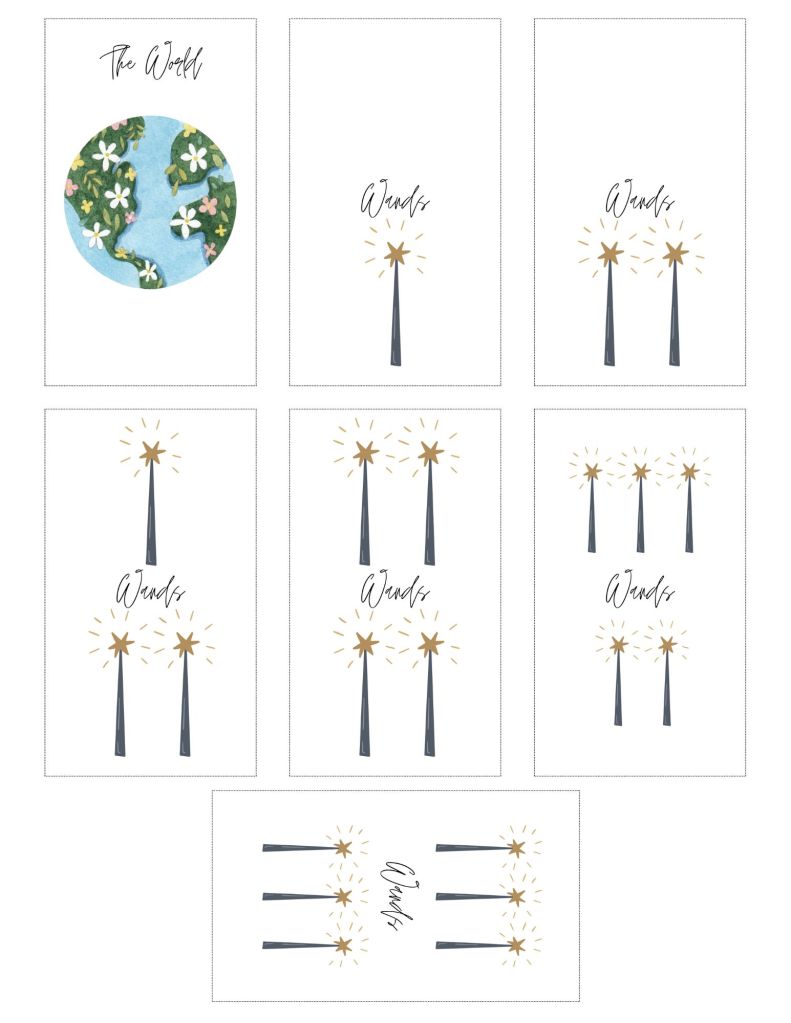
Major Arcana Tarot Cards
The Major Arcana consists of 22 cards representing major life events, spiritual lessons, and archetypal experiences. These cards often signal important transitions or turning points.
Examples include:
The Fool – new beginnings
The Magician – manifestation and skill
The High Priestess – intuition and hidden knowledge
The World – completion and fulfillment
Minor Arcana Tarot Cards
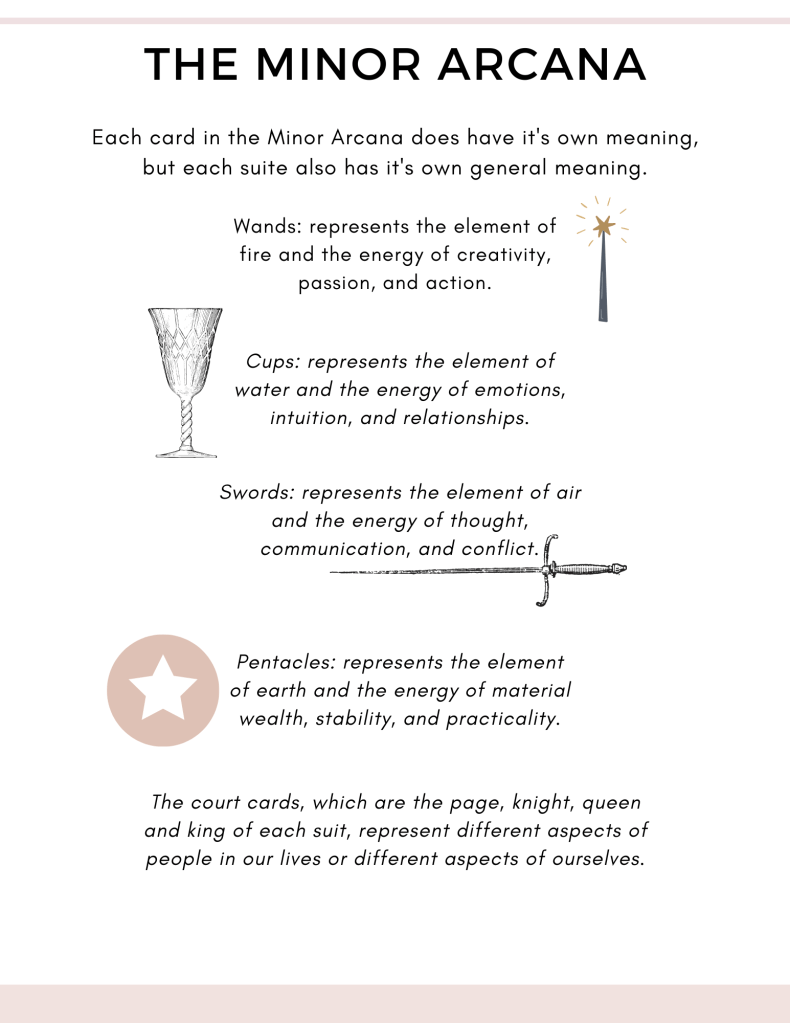
The Minor Arcana reflects everyday life and is divided into four suits:
Wands (Fire): creativity, passion, action
Cups (Water): emotions, intuition, relationships
Swords (Air): thoughts, communication, conflict
Pentacles (Earth): work, stability, material life
The court cards (Page, Knight, Queen, King) often represent people, roles, or aspects of the self.
Final Reminder for Tarot Beginners
Tarot interpretation is personal. These meanings reflect common interpretations and my own research, but your intuition matters most. Tarot is a tool for self-discovery, reflection, and growth, not a set of absolute answers.
If you are learning tarot, give yourself time. Practice, curiosity, and patience are key.



 by Joanna Arcana
Leave a comment